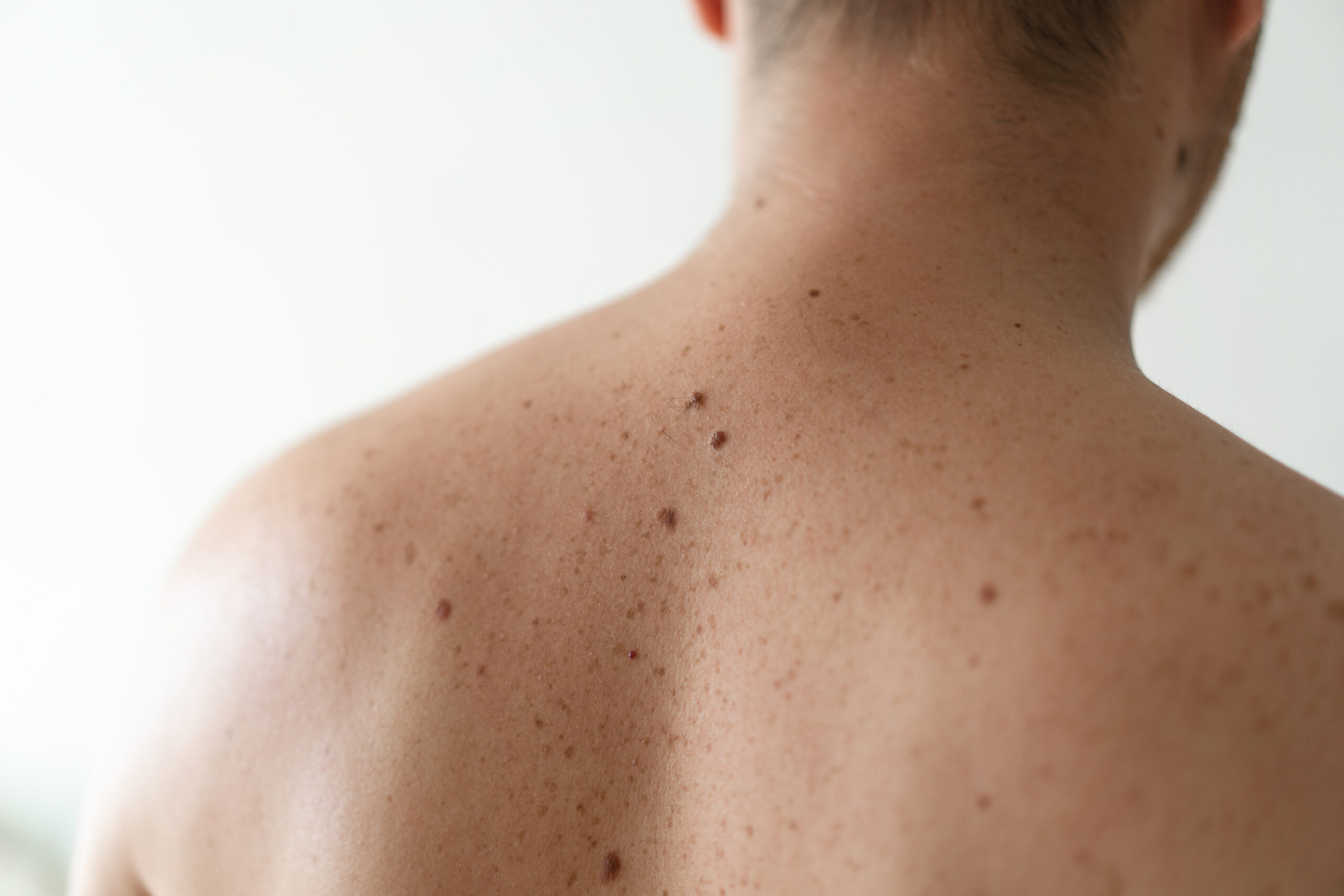
Almost everyone has them. A small brown spot on an arm, a cluster on your back, or a tiny mark on your face. Moles are so common that we often don’t give them a second thought. For the most part, these pigmented spots are completely harmless—just a normal part of your skin’s landscape. Most adults have somewhere between 10 and 40 moles on their body, and many of these have been there since childhood.
However, while the vast majority of moles are benign, some can undergo changes that signal a risk for melanoma, the most serious form of skin cancer. The key to early detection and successful treatment is knowing the difference between a normal mole and one that warrants a closer look from a professional. The idea of checking your own skin can feel intimidating, but it is one of the most powerful things you can do for your long-term health.
This guide will empower you to become familiar with your skin. We will explain what makes a mole “normal,” teach you the simple ABCDE method for self-screening, and clarify exactly when it is time to schedule a dermatology exam. Your skin is your body’s largest organ; learning its language is a skill that could save your life.
What is a Mole and Why Do We Get Them?
A mole, known medically as a nevus (plural: nevi), is simply a cluster of pigmented cells called melanocytes. Melanocytes are the cells responsible for producing melanin, the pigment that gives your skin, hair, and eyes their color. When these cells grow in a group instead of spreading out evenly, a mole is formed.
Moles can be present at birth (congenital nevi) or develop later in life (acquired nevi), which is more common. Their appearance is influenced by genetics and sun exposure, particularly during childhood and adolescence. They can be flat or raised, smooth or rough, and may even have hair growing from them. The color can range from pinkish flesh tones to tan, brown, or nearly black.
A “normal” or “common” mole is typically small (less than 6 millimeters, about the size of a pencil eraser), has an even color, and a round or oval shape with a smooth, well-defined border. Over time, a normal mole might change slowly, becoming slightly raised or lighter in color, but these changes happen gradually over years. Rapid or unusual changes are what we need to watch for.
The ABCDEs of Melanoma: Your Guide to Self-Screening
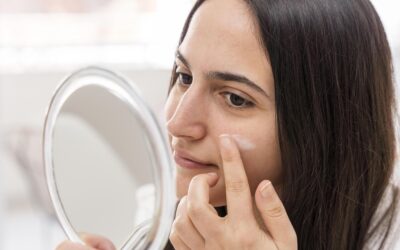
Dermatologists recommend performing a skin self-exam once a month to check for any new or changing spots. The most effective way to do this is by using the ABCDE memory aid. This simple guide helps you identify the warning signs of atypical moles that could be melanoma. Stand in front of a full-length mirror and use a handheld mirror for hard-to-see areas like your back and scalp.
A is for Asymmetry
Imagine drawing a line through the middle of the mole. A benign mole is generally symmetrical, meaning both halves look alike. If one half of the mole does not match the other half, it is considered asymmetrical. This is a potential red flag.
B is for Border
Normal moles have smooth, even borders. Look for moles with borders that are irregular, scalloped, notched, or poorly defined. The pigment might seem to bleed into the surrounding skin.
C is for Color
A common mole usually has a single, uniform shade of brown. A mole with multiple colors is a warning sign. Look for the presence of different shades of brown, tan, or black. The appearance of red, white, or blue within a mole is also a significant concern.
D is for Diameter
Benign moles are typically smaller than 6 millimeters (about 1/4 inch) in diameter. While melanomas can sometimes be smaller when first detected, a mole that is larger than a pencil eraser should be considered suspicious and checked by a dermatologist.
E is for Evolving
This is arguably the most critical letter in the alphabet. Any mole that changes in size, shape, color, or elevation is a cause for concern. This also includes the development of new symptoms, such as bleeding, itching, or crusting. A mole that looks different from all the others on your body—often called the “ugly duckling” sign—also needs to be evaluated.
Monitoring Your Skin: Practical Tips for a Monthly Check
Performing a monthly self-exam might sound like a chore, but it only takes about 10 minutes. Consistency is key.
- Choose a Day: Pick the first day of the month or another easy-to-remember date.
- Get Good Lighting: Perform your check in a brightly lit room. Natural daylight is best.
- Be Thorough: Start at your head and work your way down. Don’t forget your scalp (use a comb or hairdryer to part your hair), between your fingers and toes, the soles of your feet, your ears, and your back.
- Use Your Tools: A full-length mirror and a hand mirror are your best friends for checking hard-to-see places like your back, the back of your neck, and your legs. Don’t be afraid to ask a trusted partner or family member to help.
- Take Pictures: It can be difficult to remember what a mole looked like a month ago. Use your smartphone to take clear pictures of your moles, especially any that you are watching. This creates a “mole map” that you and your dermatologist can reference over time.
When Should You Schedule a Dermatology Exam?
While monthly self-exams are essential, they are not a substitute for a professional evaluation by a board-certified dermatologist. An annual skin check is recommended for most adults, but you should book an appointment sooner under certain circumstances.
Schedule an exam if:
- You notice any mole that fits the ABCDE criteria.
- A mole starts to itch, bleed, or become painful.
- A new, unusual-looking mole appears after the age of 30.
- You have an “ugly duckling” mole that just doesn’t look like the others.
- You have a personal or family history of skin cancer, particularly melanoma.
- You have a large number of moles (more than 50).
- You have a history of significant sun exposure or tanning bed use.
During a professional skin exam, a dermatologist uses a special magnifying tool called a dermatoscope to look at your moles. This tool allows them to see patterns of pigment and blood vessels that are not visible to the naked eye, helping to distinguish between a benign mole and a potential skin cancer with much greater accuracy.
If a mole looks suspicious, your dermatologist may perform a biopsy. This is a quick and simple procedure where a small sample of the skin is removed and sent to a lab for analysis. A biopsy is the only way to definitively diagnose or rule out melanoma.
The Bottom Line
Your moles are a unique part of you, and understanding them is a fundamental part of taking care of your health. Most are harmless friends that will be with you for life. However, paying attention to them through regular self-checks is a simple habit that provides powerful protection. By familiarizing yourself with the ABCDEs and knowing what is normal for your skin, you can spot potential problems early.
Remember, when it comes to skin cancer, early detection dramatically increases the chances of a successful outcome. Do not hesitate to seek professional advice if you notice something that worries you. It is always better to be safe and have a mole checked than to wait and worry.
At Complete Family Dermatology, our experts are trained to identify suspicious lesions and provide peace of mind. Let us be your partner in skin health.
If you have a mole that concerns you or you are due for your annual skin exam, visit the Complete Family Dermatology website or call (402) 423-1111 today to schedule your appointment.