Have you ever noticed a breakout appear right before a big presentation? Or watched a patch of eczema flare during a stressful family season? You are not imagining things. The connection between your mind and your skin is real, deeply rooted in biology, and more powerful than most people realize.
Your skin is your body’s largest organ, and it responds to what happens inside you—including your emotional state. When stress builds, your skin often shows it. For many patients, understanding this link is the first step toward calmer, healthier skin.
In this guide, we will explore exactly how stress affects your skin, which conditions it tends to worsen, and the practical steps you can take to protect your complexion during life’s most demanding moments.
The Science Behind the Stress-Skin Connection
To understand why stress shows up on your skin, we need to look at what happens inside your body during stressful periods.
When you feel stressed, your brain signals your adrenal glands to release stress hormones, most notably cortisol. This “fight or flight” response was designed to protect you from short-term threats. In small, occasional doses, it is harmless. The problem arises when stress becomes chronic, keeping cortisol levels elevated for weeks or months at a time.
How Cortisol Affects Your Skin
Sustained high cortisol creates a chain reaction throughout your body that directly impacts your skin:
- Increased oil production: Cortisol stimulates your sebaceous glands to produce more oil, which can clog pores and lead to breakouts.
- Weakened skin barrier: Chronic stress impairs your skin’s protective barrier, allowing moisture to escape and irritants to enter more easily. This leaves skin dry, sensitive, and reactive.
- Slower healing: Elevated cortisol slows down your skin’s natural repair process, meaning blemishes, wounds, and irritations take longer to resolve.
Inflammation and Your Immune System
Stress also triggers widespread inflammation in the body. It prompts the release of inflammatory chemicals called cytokines, which can inflame the skin and aggravate existing conditions.
At the same time, chronic stress disrupts your immune system. It can weaken your body’s defenses while simultaneously causing the immune system to overreact in certain areas. For skin conditions rooted in immune dysfunction—like psoriasis and eczema—this imbalance can spark or intensify flare-ups.
In short, stress doesn’t just live in your mind. It creates measurable, physical changes that your skin absorbs and reflects.
Skin Conditions Commonly Triggered or Worsened by Stress
While stress can affect anyone’s skin, certain conditions are especially sensitive to emotional strain. Here are the most common ones we see aggravated by stress.
Acne
Stress and acne share a well-documented relationship. When cortisol boosts oil production, your pores become more likely to clog. Combined with stress-related inflammation, this creates the perfect environment for breakouts. This is why acne often worsens during exams, deadlines, or major life changes—regardless of your age.
Eczema
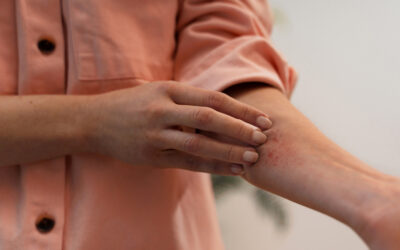
Eczema, or atopic dermatitis, is closely tied to the skin’s protective barrier and immune response. Stress weakens that barrier and increases inflammation, which can trigger the intense itching, redness, and dryness of a flare. Unfortunately, the discomfort of a flare often adds more stress, creating a frustrating cycle.
Psoriasis
Psoriasis is an immune-driven condition that causes skin cells to multiply too quickly, forming thick, scaly patches. Because stress disrupts immune function and drives inflammation, it is one of the most common triggers for psoriasis flares. Many patients report their symptoms worsen noticeably during high-stress periods.
Rosacea
Rosacea causes facial redness, flushing, and visible blood vessels. Stress is a leading trigger, partly because emotional strain can cause blood vessels to dilate. A stressful moment can bring on a sudden flush, and ongoing stress can make rosacea harder to control over time.
Hives
Stress can also cause hives, raised, itchy welts that appear suddenly on the skin. Emotional stress prompts the release of histamine, the same chemical involved in allergic reactions. For some people, stress alone is enough to trigger an outbreak of hives.
Practical Strategies to Minimize Stress’s Impact on Your Skin
The good news is that you have real power to break the stress-skin cycle. While you can’t eliminate stress entirely, you can manage it in ways that protect your skin and support your overall well-being.
Prioritize Quality Sleep
Your skin repairs itself while you sleep, and rest is one of the most effective ways to lower cortisol. Aim for seven to nine hours each night. Create a calming bedtime routine, limit screens before bed, and keep your bedroom cool and dark to encourage deeper rest.
Move Your Body Regularly
Exercise is a proven stress reliever. Physical activity lowers cortisol and boosts mood-enhancing endorphins. Even a brisk daily walk can make a meaningful difference. Just remember to cleanse your skin gently after sweating to keep pores clear.
Practice Mindfulness and Relaxation
Techniques like deep breathing, meditation, and yoga help calm your nervous system and reduce the stress response. Even a few minutes a day can help. Try taking slow, deep breaths before a stressful event, or spend a quiet moment focusing on the present.
Nourish Your Body
A balanced diet supports both your mind and your skin. Focus on whole foods rich in antioxidants, healthy fats, and vitamins—think colorful fruits and vegetables, fatty fish, nuts, and whole grains. Stay well hydrated, and try to limit sugar and heavily processed foods, which can fuel inflammation.
Keep Up a Gentle, Consistent Skincare Routine
During stressful times, it’s tempting to skip your routine or reach for harsh products in frustration. Instead, keep things simple and gentle. Cleanse twice daily, moisturize to support your skin barrier, and always apply broad-spectrum sunscreen. Consistency helps your skin stay resilient when stress runs high.
Lean on Your Support System
Connection matters. Talking with friends, family, or a mental health professional can ease emotional burdens and lower stress. You don’t have to carry everything alone, and caring for your mental health is a genuine part of caring for your skin.
When to Seek Professional Help
Lifestyle changes make a powerful difference, but sometimes your skin needs more support—and that’s completely okay. Reaching out to a dermatologist is a proactive, informed step, not a sign of failure.
Consider scheduling a consultation if:
- Your skin condition persists or worsens despite consistent home care.
- Flare-ups are affecting your sleep, comfort, or daily activities.
- You notice signs of infection, such as increased redness, warmth, swelling, or oozing.
- Your skin concerns are impacting your confidence or emotional well-being.
- You’re unsure what’s triggering your symptoms and want expert guidance.
A dermatologist can identify the root of your skin concerns, recommend targeted treatments, and help you build a plan that addresses both the physical and emotional sides of your skin health. When needed, we can also help you understand how stress management fits into your overall treatment strategy.
Caring for Your Skin Starts with Caring for Yourself
The link between stress and your skin is a reminder that true skin health goes beyond creams and cleansers. When you care for your mind—through rest, movement, connection, and calm—you give your skin the support it needs to thrive.
Be patient with yourself and your skin. Managing stress is a journey, and every small step you take helps. You deserve to feel comfortable and confident in your skin, and you don’t have to navigate the path alone.
If stress is taking a toll on your skin, our compassionate team is here to help you find lasting relief with a plan tailored to your unique needs.
Visit the Complete Family Dermatology website or call (402) 423-1111 today to schedule your consultation.